Andrew Munsell
I am a software engineer based out of Seattle, WA
Another small project of mine, for pilots: https://www.weatherabove.com/
Most of the existing METAR/TAF websites are not great, in my opinion, and lack access to more powerful forecasts like NBM. Hopefully this fills in a very small niche
It's been over 6 years since I updated my website. This is mostly because I have been incredibly busy, but Wordpress's clunkiness certainly contributed to a lack of motivation to post anything.
I used #Statamic a very long time ago and it's good to finally move back.
Notable additions: auto cross-posting from Mastodon to my blog (the reverse might come at some point), and being self-hosted in my #homelab Kubernetes cluster (plus Cloudflare Always Online to make up for my home Internet)
Some late-night hacking and I have a very much experimental bot that posts images generated by #StableDiffusion based on a poll from users.
Check it out and let me know what you think, or if it breaks :)
Note: it actually does abide by the poll results…
Formingo: Easy, free HTML form processing for static websites
One thing I ran across when building my website with Jekyll, a static website generator, was that it restricted my ability to have dynamic content, such an HTML form and blog comments.
Disqus, a popular service that manages comments, alleviated the latter pain, however, the inability to have a simple contact form was huge. There are a couple third-party services that allow you to build forms, but many of them (such as Google Forms) are unnecessarily complex. They often embedded in iFrames or take you to their own domain to submit the form, meaning that they present visitors with a form that doesn't match the rest of the website stylistically, or are taken away from your website altogether.
To fix this, I built Formingo. Formingo is a new service that allows you to easily create HTML forms that get sent directly to your email address. It's completely free to use for up to 500 submissions a month, and there are a ton of new features coming. In fact, just today, I launched pre-verified email addresses and domains.
Read "Formingo: Easy, free HTML form processing for static websites"Edge of Nowhere
If you have an Oculus Rift, you owe it to yourself to buy Edge of Nowhere. It's an incredibly atmospheric game, and well worth the purchase.
Oculus Rift: A Bug with Windows Power Plan Configuration
I pre-ordered the Oculus Rift, a virtual reality headset, on January 6th of this year. After following the Rift from its Kickstarter campaign to trying it in person at PAX 2014, I've been waiting for the promise of virtual reality for years. Last week, my dream finally came true-- I received one of the very first Oculus Rift "CV1" headsets. After plugging it in and launching demos that cannot be explained with words, I noticed something wrong with my PC. The CPU fan was going crazy, and the sensors were reporting abnormally high temperatures.
Read "Oculus Rift: A Bug with Windows Power Plan Configuration"Predicting Disney World Wait Times with Neural Networks
Machine learning is an extremely important topic in computer science. We've come to the point where there's some problems that just cannot be solved with algorithms and code, and machine learning is the solution.
I haven't had a ton of experience with machine learning beyond Andrew Ng's amazing Machine Learning course and I recently set out to change that.
Read "Predicting Disney World Wait Times with Neural Networks"Oculus Rift Pre-Orders
The Oculus Rift is finally available for pre-order and many are having sticker shock with the $599 price tag. With tax and shipping costs (really? shipping costs on a $599 device? I suppose I might be spoiled by Amazon), it can come out to almost $700 in the United States. However, this is pretty close to the price of a high-end monitor (such as the curved 34-37 inch models), and you get a decent amount of hardware included: motion tracking, the tracking camera, Xbox controller, Oculus Remote, etc.
Read "Oculus Rift Pre-Orders"Needlepoint 1.0.5
For more information on Needlepoint-- my JavaScript dependency injection system--you can take a look at my introductory blog post or the README file on GitHub.
I have updated Needlepoint to version 1.0.5 in NPM. There's a couple changes, none of which should break if you use an older version and upgrade to this version.
Read "Needlepoint 1.0.5"Learning to Create a Full-Stack Redux-React Website
Though I am an Angular JS type of person, I regularly follow other JavaScript frameworks to keep up with the rest of the world. React, along with the Flux design pattern, is a relatively popular alternative to the Angular ecosystem. However, React+Flux is extremely different from other frameworks-- for starters, React isn't actually a full JavaScript framework by itself, and Flux isn't actually a thing: it's a type of architecture. Tero Parviainen wrote an amazing introduction to the Redux+React ecosystem with an overview of how not only the two libraries themselves work, but conceptually how they fit together and why the Flux architecture and immutability makes sense in a web application.
Read "Learning to Create a Full-Stack Redux-React Website"Dependency Injection for Modern Javascript Using ES6 Classes and ES7 Decorators
In the past, I've done a lot of work with PHP and the Laravel framework. One of the coolest features about Laravel is its Inversion of Control system, which dynamically injects dependencies into your application at runtime.
This is beneficial for many reasons, including modularity, readability, and testability. With a dependency injected system, you can simply request that your application receives an instance of an object, and the DI container will do all of the work to initialize the object and all of its dependencies.
Read "Dependency Injection for Modern Javascript Using ES6 Classes and ES7 Decorators"Getting Started with Rancher, a self-hosted Docker PaaS
Docker is fantastic for building a scalable infrastructure. Not only does it force you to isolate your application into reasonable chunks, but it also encourages you to build these pieces as stateless services. This is fantastic for high availability and scalability, but actually scaling out a pure Docker-based infrastructure is difficult if done manually.
Docker Swarm and Compose are the "official" solutions to this problem-- they allow for you to build a giant, elastic Docker cluster that appears as a single machine to your client. Additionally, Compose allows you to scale your application easily to multiple instances.
Despite this, these two components are lacking a couple critical features-- cross-machine service discovery, as well as a built-in load balancer that distributes traffic to your scaled Docker infrastructure.
Tutum is a service that adds these remaining components, and to great success. Though you can use your own nodes with Tutum, sometimes it's desirable to use your own, self-hosted service.
Rancher is an open source Docker PaaS that includes features like service discovery and DNS, load balancing, multi-node support, cross-host networking, health checks, multi-tenancy, and more. Essentially, Rancher takes all the features of Tutum and packs it into a single Docker container that is hosted on your own nodes so that you have complete control.
Even better, Rancher is extremely easy to install in a matter of minutes.
To find out how, check out my new mini-course that I will be expanding over the next several weeks to cover new features in Rancher, as well as expand it to cover how to use advanced features such as service discovery. It's completely free, and I hope you find it useful!
Read "Getting Started with Rancher, a self-hosted Docker PaaS"Northwestern - A Wordpress Theme Inspired by the Pacific Northwest
I just launched a brand new, responsive, and completely free Wordpress theme. Inspired by my home-- the Pacific Northwest (of the United States)-- Northwestern is a minimalistic Wordpress theme for independent bloggers.
The theme's look can also be customized to fit your personality, with the primary colors and hero image changeable. Northwestern also supports several of the Wordpress post formats, including "aside", links, and quotes.
Go ahead and grab it for free from my website, and feel free to use it for both personal and commercial websites. More information on the license can be found on the store page.
Read "Northwestern - A Wordpress Theme Inspired by the Pacific Northwest"CI/CD with Docker Containers
I've been experimenting with Docker for a while, but in the last year or so there has been an influx in the number of tools that help put Docker containers into production easily. Some of these are from third party companies, such as CoreOS, and some from Docker itself (such as the new Docker Swarm, Docker Machine, and Docker Compose. However, I've recently been testing a new Docker workflow that allows me to push code, have it tested, built, and deployed into a production server cluster running Docker.
Read "CI/CD with Docker Containers"LoopPay's Big Problem, and How Samsung Could Fix It
Today, LoopPay announced that they were acquired by Samsung. This wasn't entirely unforeseen, considering rumors have been popping up regarding LoopPay's future integration with Samsung phones. The LoopPay system is a new technology that is tied to the current magnetic stripe credit card system. Using a small loop of wires in a special hardware device, the LoopPay devices essentially mimic the magnetic field caused by a swipe of a credit card, enabling mobile payments at nearly every existing credit card swipe terminal.
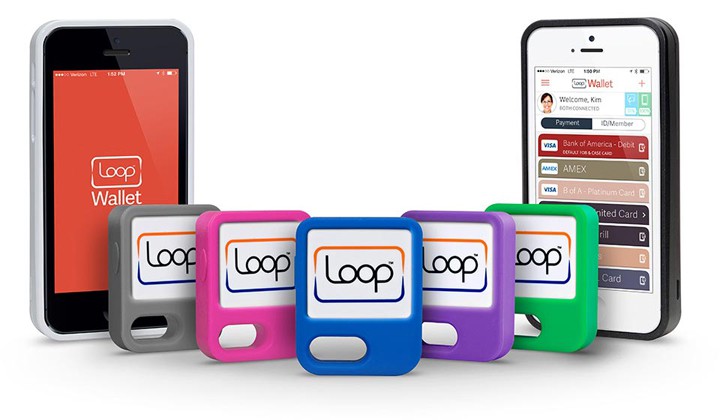
The device works like magic-- simply place the Fob or Card next to the magnetic swipe slot on an existing credit card machine, press a button on your LoopPay, and the reader will act as if a physical card was swiped. I've owned one of these devices for a little over a month (specifically, the LoopPay Card) and it has worked flawlessly every time I've used it on a traditional terminal, but there's one big problem that needs to be solved before LoopPay can become a major player in the mobile payments space.
Read "LoopPay's Big Problem, and How Samsung Could Fix It"How to Install NOOBS on Your Raspberry Pi
NOOBS is a system designed by the Raspberry Pi foundation for installing operating systems onto your Raspberry Pi's SD card. Not only are you able to install an operating system with a single click, but you can install it over a network or even install multiple operating systems on multiple partitions.
Read "How to Install NOOBS on Your Raspberry Pi"Raspberry Pi 2 - What's New, and What's the Same
A couple days ago, the Raspberry Pi foundation released the Raspberry Pi 2. The Raspberry Pi 2 comes with some fantastic new features that I'm looking forward to utilizing, including an upgraded processor and RAM. Even better, the hardware comes in at the same $35 as the original model B.
Read "Raspberry Pi 2 - What's New, and What's the Same"Learn How to Use JavaScript ES6 Classes and Arrow Functions
What better way to start the new year than with a couple quick lessons on new JavaScript features. I'm in the process of writing a series of short lessons on the new ES2015/ES6/ES7 JavaScript features, such as the immensely helpful classes and arrow functions.
For this course, I've also written a series of quizzes that help you keep on your toes-- simply register for an account, navigate to the course page, and click the button titled "Start Taking this Course". You'll be able to take the quizzes and see your results, along with keep tabs on your reading progress. All of this is completely free and you are not added to mailing lists of any kind (the email address is required so that you can reset your password if needed)!
Read "Learn How to Use JavaScript ES6 Classes and Arrow Functions"How to Remove the 12 mbps Limitation from Plex to Chromecast
Update: As of October 15th, 2015 (about 10 months after I originally wrote these instructions), Plex has finally removed the hard coded maximum bitrate. This guide will remain for historical reasons, but you should now not be required to follow these steps to stream high bitrate video to your Chromecast.
I am an enthusiastic user of Plex, but recently I discovered that they were making the poor choice of hard-coding a bitrate limitation in their Chromecast application. Essentially, this enforced a 12,000 kbps (~12 mbps) limitation on media, meaning that anything that has a higher bitrate would be transcoded. This isn't a problem when you have a decent server running Plex, but I am running it on an old laptop that can barely keep up with 4 mbps transcodes.
I was able to get around the hard coded limitation (the technical how-I-did-it is also available), and you can do it to:
Read "How to Remove the 12 mbps Limitation from Plex to Chromecast"Reverse Engineering Plex: Casting High Bitrate Video to Chromecast
I am a big fan of Plex Media Server-- it has a great set of software, both server and client side, and is much easier to setup and use than alternatives such as XBMC. Attached to my ReadyNAS, my Plex server has access to 6 TB of storage.
I also have several Chromecast devices-- they're great little media streamer sticks that simply plug into your HDMI port on your TV. Using your phone as a remote, you can "cast" media from an app (such as Netflix, HBO, or Plex) and onto your TV. Chromecast also has a browser API, so Plex's website also allows you to cast media to your local TVs.
There's one major issue, however, in terms of compatibility between Plex and the Chromecast-- and it's not actually the Chromecast's fault. Plex, for whatever reason, has decided to limit the maximum bitrate of a video file to 12 mbps when casting to a Chromecast device. If you have a powerful PC running as your Plex server, this is fine-- the server software will transcode the higher bitrate videos on the fly to 12 mbps. But, I am using an old laptop that can barely transcode to 4 mbps, 720p video files, so the video playback stutters.
Plex claims this forced transcoding is due to "performance issues" with media over 12 mbps, but this is not true1. Not only have users casted media higher than 12 mbps from other apps, but I have successfully gotten around this hard coded limitation and streamed 20+ mbps video without a problem.
Read "Reverse Engineering Plex: Casting High Bitrate Video to Chromecast"